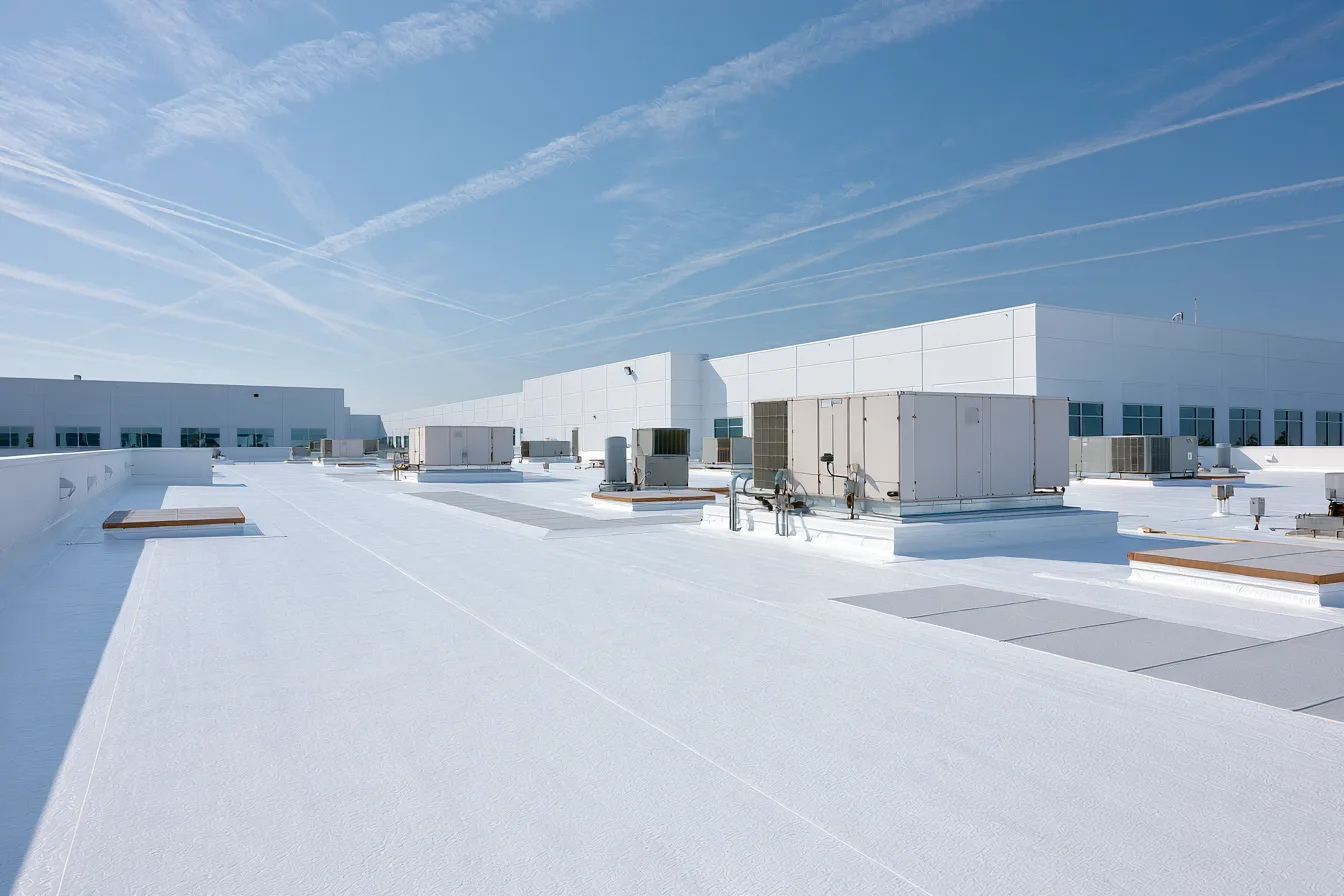
Commercial roofing along Highway 121 in Bedford
A storefront leak, standing water beside a rooftop unit or a roof replacement that has to fit around tenants: start with the building and the problem. Pitched and low-slope roofs along the Highway 121 corridor need different details, with access and drainage planned as part of the work.
Two kinds of roofs along the frontage road
Bedford's highway overlay adds design and screening requirements to development along the frontage. Its older published ordinance required pitched roofs on buildings of 5,000 square feet or less, but Council approved removing that requirement in December 2023. Do not choose a reroof system from that old size rule. Confirm the property's current requirements with the city when a change is planned.
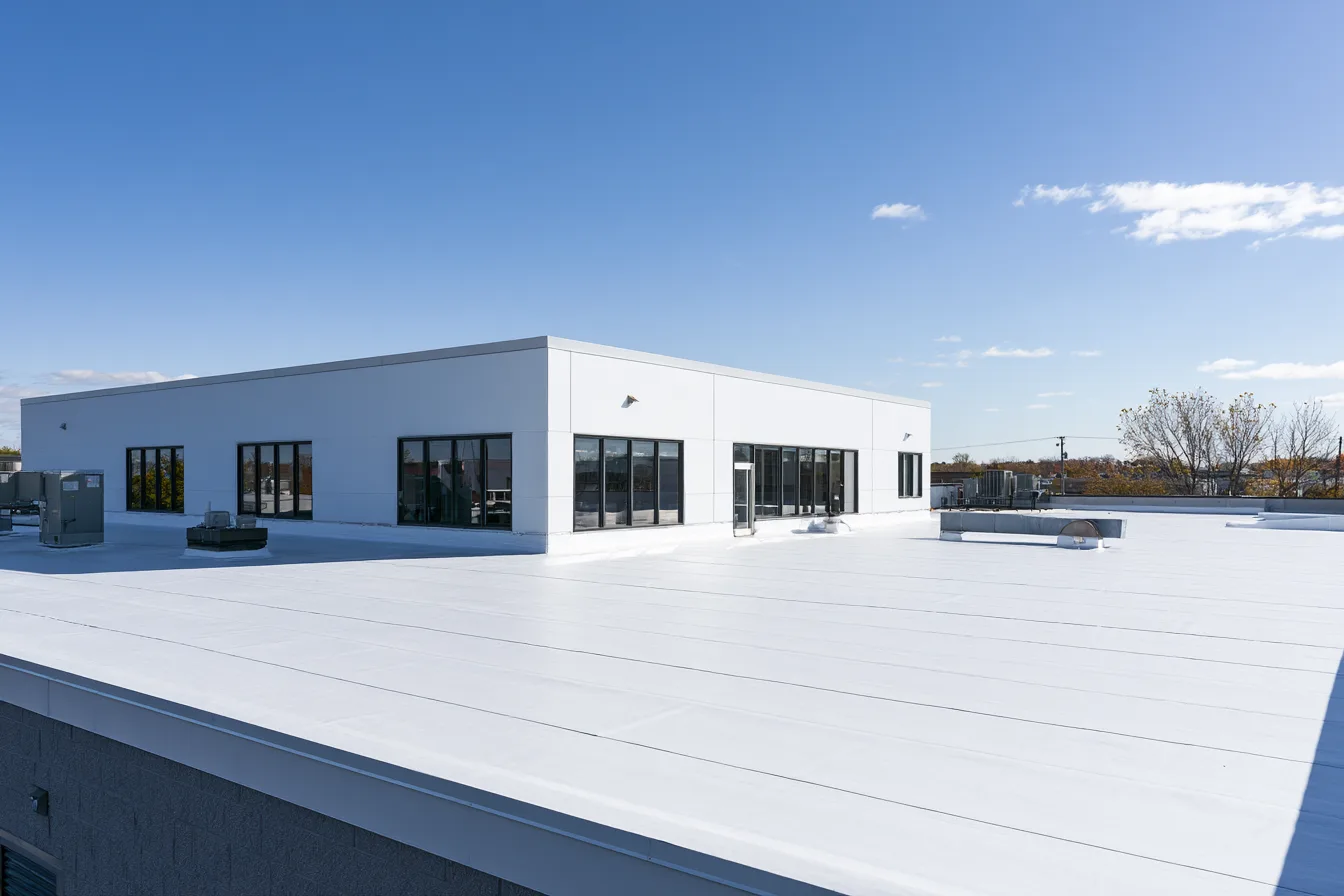
The roof you have is the practical starting point. A pitched covering needs sound courses or panels and correctly connected valleys, wall details and penetrations. A low-slope roof needs an intact field, seams, perimeter and drainage route. An inspection considers those parts together, including how rooftop equipment and canopies meet the building.
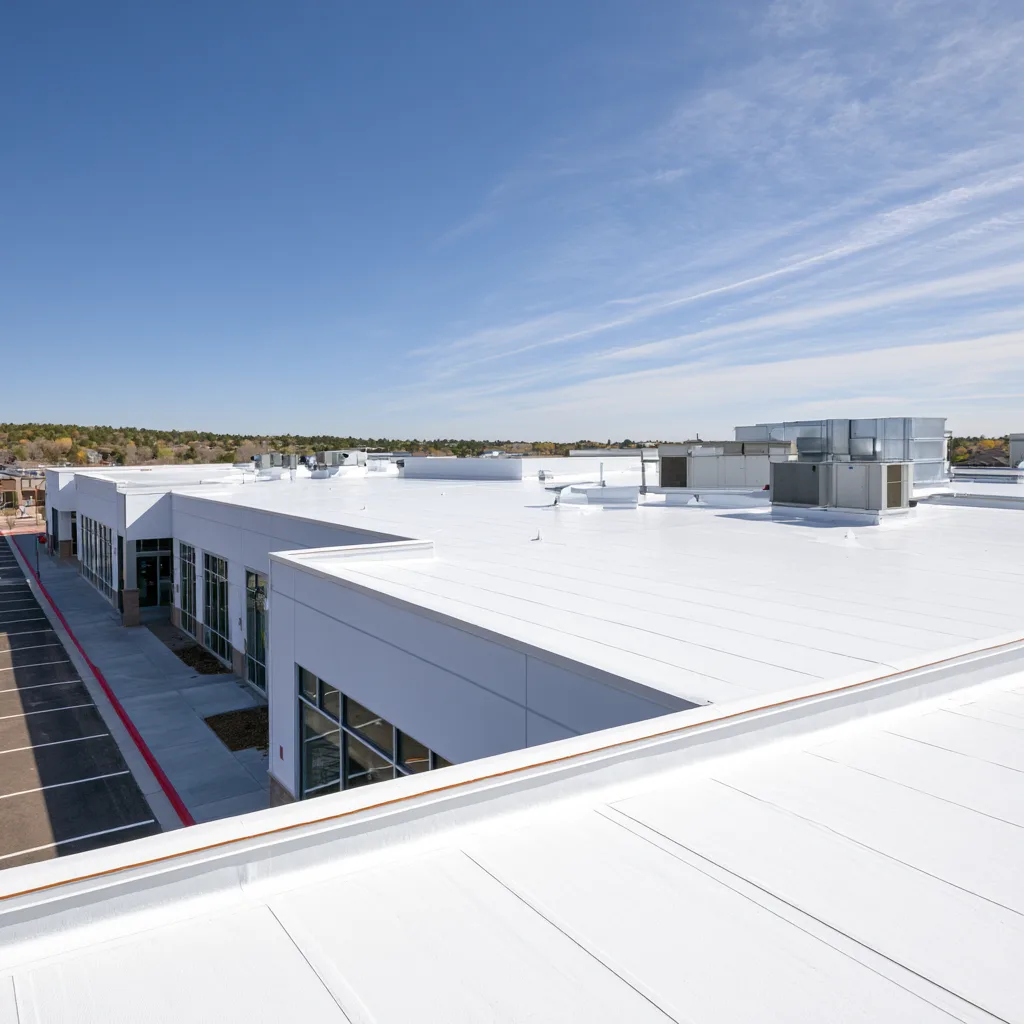
Where a corridor roof leaks
An opening may be in the covering or at a connection. These are useful parts of the inspection, not a list of the only places a roof can leak.
Equipment details and the roof around them
Check how screens and units meet the roof
Equipment screens may be part of a parapet or may use separate supports. Where a support or curb passes through the roof, its waterproof connection needs to suit the existing system. The inspection includes attachment, flashing, nearby service paths and the open field, as well as drains. A stain below a unit does not by itself prove which part is leaking.
Coatings protect a sound roof, not a wet one
A compatible reflective coating can be an option for a suitable existing roof. It needs preparation, defined repairs and a retained assembly that meets the product's requirements. Investigate suspected wet insulation and address its extent, attachment and drainage before covering the surface. That establishes whether restoration is worthwhile or whether a larger scope is needed.
Commercial roofing services for Highway 121 buildings
Choose the system you have, or start with an inspection when the roof file is thin.
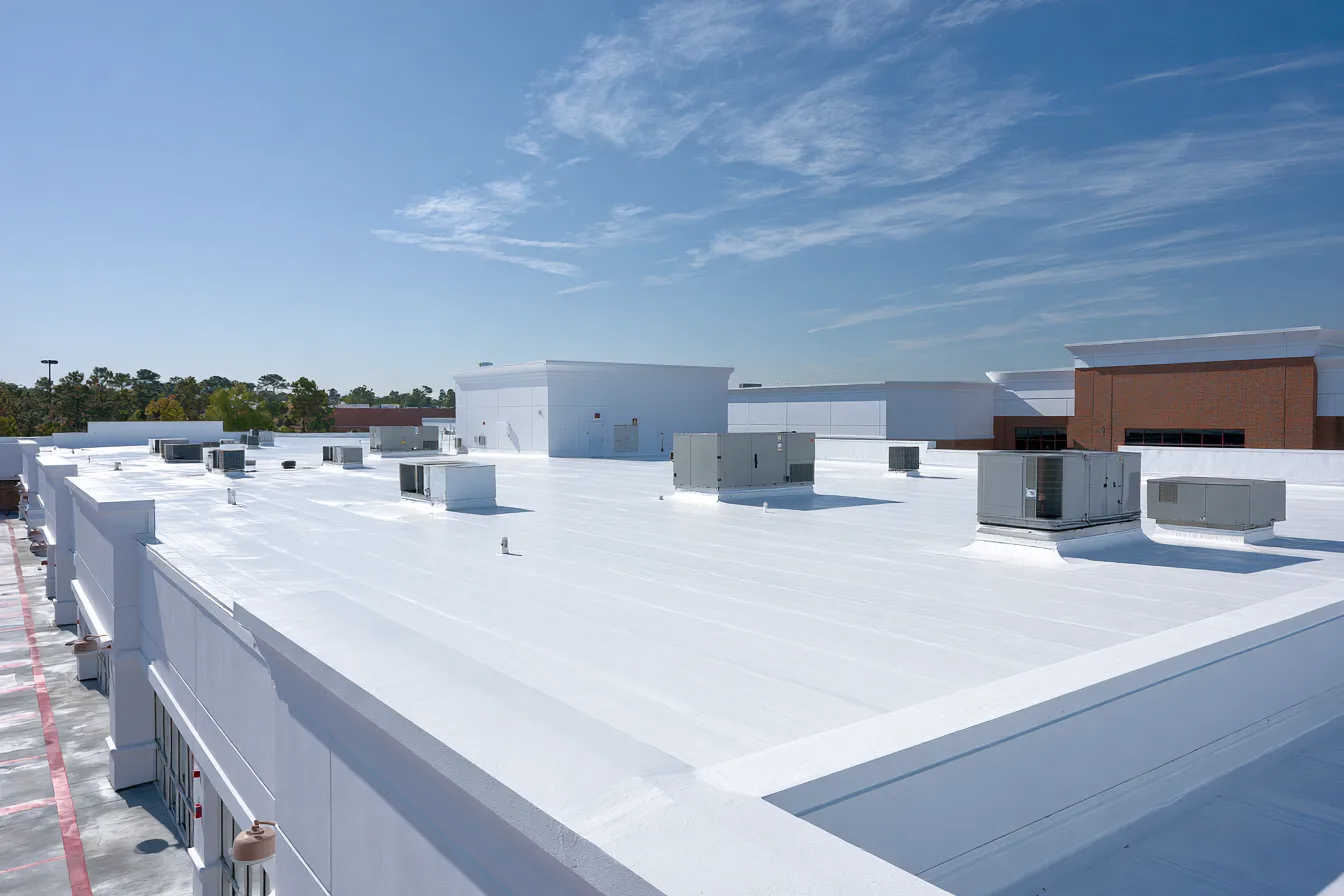
TPO roofing
Heat-welded single-ply for new roofs and replacements, with seams, curbs and drains detailed for the building.
See the details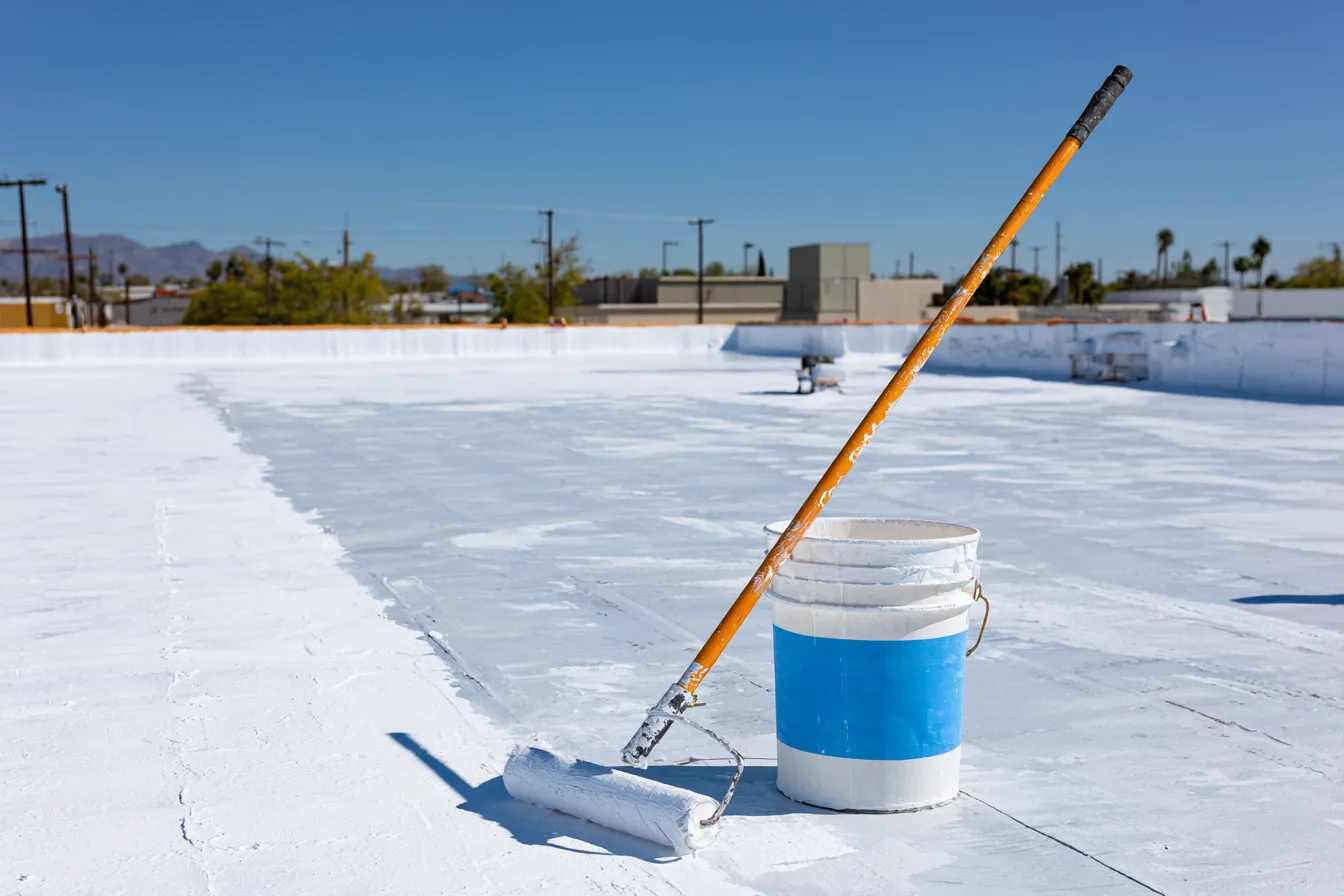
Roof coatings
Compatible restoration systems with preparation, repairs, moisture condition and drainage addressed first.
See the details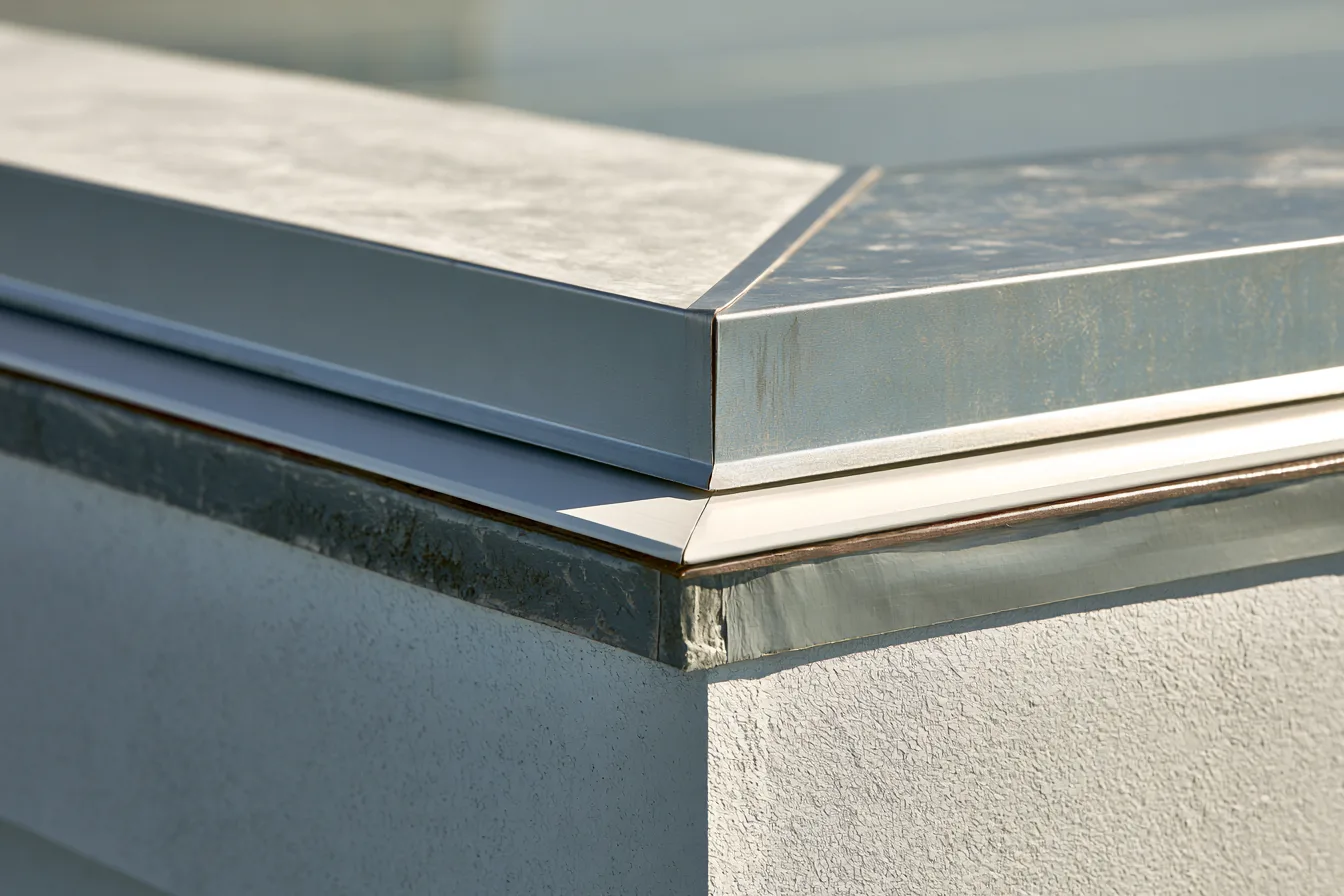
Flat roof repair
Seams, parapets, curbs and drains repaired, with the work planned around the building's hours.
See the detailsHighway 121 commercial roofing FAQs
The roof holds water near a unit after every rain. Is that urgent?
Have persistent ponding assessed, especially if water is entering the building. The roofer checks outlet blockage, roof slope and local obstructions as well as the membrane's condition. Depending on the cause, the work may involve clearing an outlet, changing drainage details or repairing roofing and damaged materials. A puddle alone does not establish what is wet underneath.
Our small commercial building has a shingle roof. Is it handled like a house?
The roof is, mostly: shingles, boots, valleys and flashings behave the same on a pad site as on a house. The differences are the canopy tie-ins, the sign mounts and the schedule. Roof repair covers how those details get scoped.
Does replacing the roof need city sign-off in the overlay?
The overlay's development and screening provisions still need to be considered for the actual property and project. Bedford amended its older small-building pitched-roof requirement in 2023, so do not rely on that provision in an old ordinance copy. Ask the building office whether the proposed reroof or equipment change triggers review; the permit guide gives the relevant contacts and permit context.
Can you look at the roof without shutting anything down?
Tell us about roof access, security procedures, sensitive operations and hours when access is possible. The contractor can confirm how the inspection fits those conditions. Any required equipment coordination or interruption should be arranged with you, and repair scheduling is a separate discussion once the scope is known.
Tell us which building and what the roof is doing
Send the address, roof type if you know it and what you have noticed. A roofer walks the roof for free and explains the findings. Include access and operating constraints so the next step can be arranged around the building.