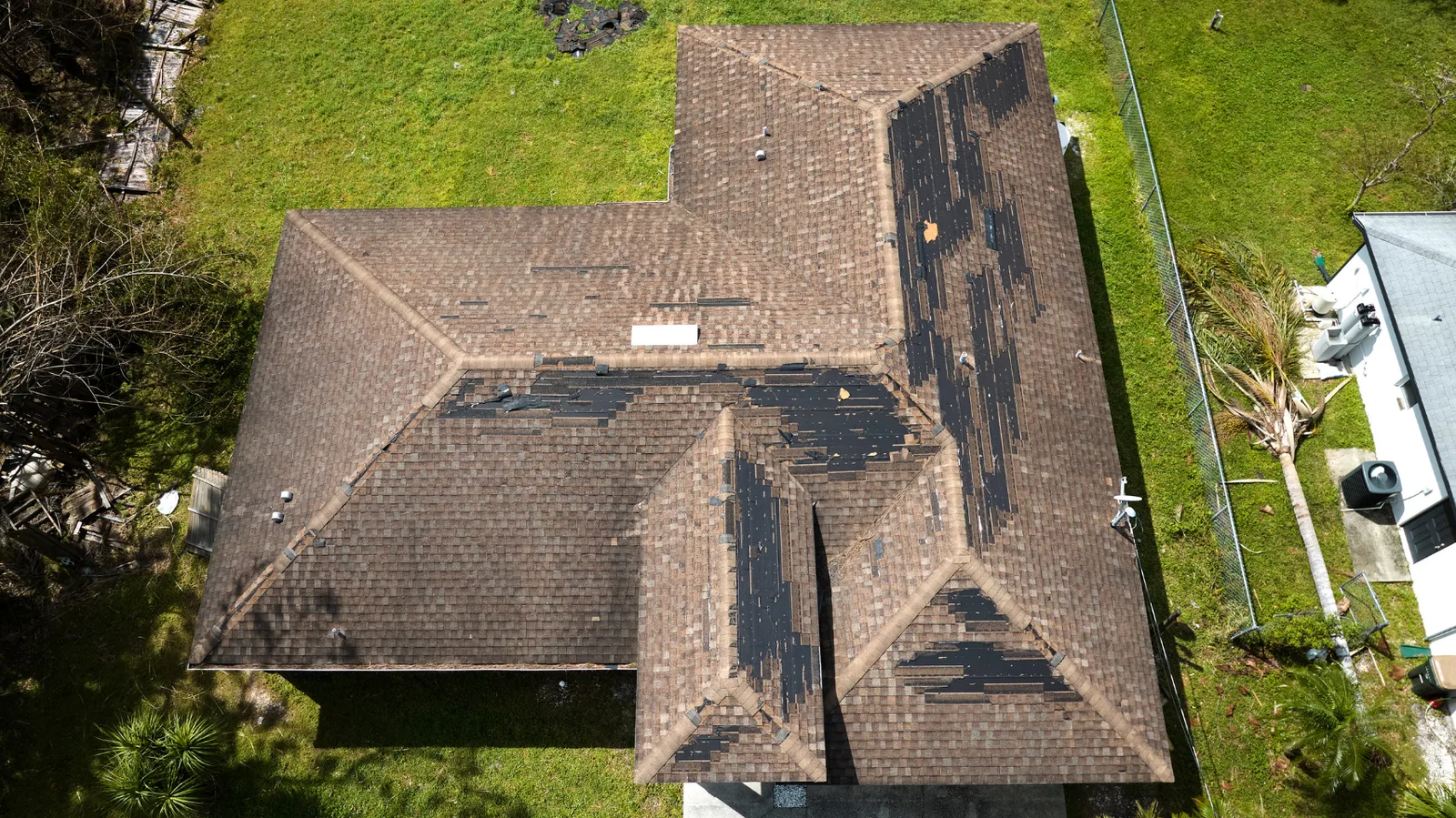
Storm damage roof repair in Bedford
If wind or hail has left you wondering about the roof, start with what you’ve noticed. A missing shingle, a new stain and a dented gutter are different clues. Get the roof checked before deciding how much work the event caused.
First, keep a roof problem from becoming an indoor one
When water is coming inside, protect people first. Avoid sagging ceilings, wet electrical equipment and downed lines. Move belongings or contain ordinary drips only if you can do so safely. Stay off a wet or damaged roof.
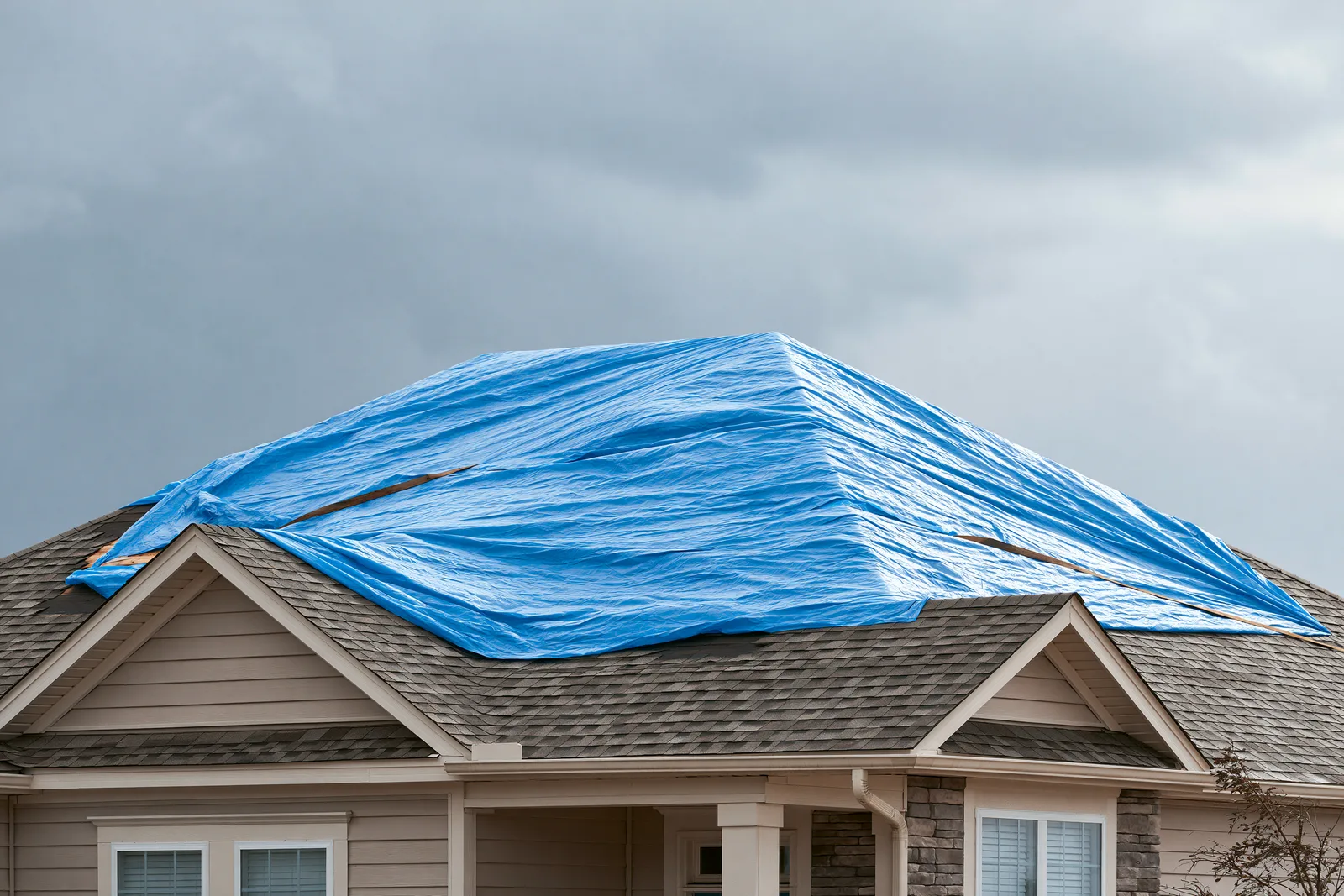
A roofer may be able to use temporary protection once conditions and access allow. That is a separate task from deciding the permanent repair. Give a clear description of active water entry, the location and any obvious missing material when requesting help.
Marks, missing material and actual openings
Visible marks need context
Dents in metal can show that impacts occurred, but they do not establish the condition of every shingle. Hail may affect the shingle mat, while scuffs, weathering or old repair marks can have another cause. The roof itself needs assessment.
Openings need a roofing scope
Missing courses, creased tabs and displaced flashing can interrupt the weather surface. The repair must restore fastening and overlaps, using material that works with the surrounding roof. Simply returning a loose piece to its old position may leave its attachment unresolved.
Temporary protection and permanent repair have different jobs
A leak that stops under a tarp is not yet a finished repair. The roof still needs its permanent water-shedding connections restored.
Limit exposure
Temporary protection aims to reduce further water entry. Its suitability depends on the damage, the weather and safe access; it is not a promise that the covering below remains sound.
Determine what was affected
Relate the visible opening to the roof around it and the wet area inside. Underlying wood or insulation may need attention beyond the missing surface material.
Complete the permanent work
Replacement material needs secure fastening, proper laps and sound flashing at the affected detail. The surrounding condition determines whether that stays a small repair or extends into a larger area.
Separate the roofing price from the claim payment
A covered roof project can still leave money to pay yourself. The deductible and the roof’s settlement basis affect that amount. Actual cash value deducts age-and-wear depreciation; replacement-cost coverage may reimburse eligible depreciation after the work.
- An ACV settlement
- The insurer subtracts depreciation and the deductible from covered cost. An ACV-only roof provision generally leaves that depreciation with the homeowner.
- An RCV settlement
- The initial check can also be reduced. A later payment depends on the covered repair or replacement, proof of expense and the policy’s conditions. Upgrades and excluded work remain separate.
A percentage wind/hail deductible is based on the policy’s insured dwelling amount rather than the roof bill. It remains part of the homeowner’s share of a covered loss.
The insurer’s claim instructions identify the deadline and proof needed for any later payment. The estimate, condition photos and paid invoices document the work; a roofing scope does not establish insurance coverage.
Roof damage and insurance coverage are separate decisions. The Texas Department of Insurance explains the homeowner’s deductible responsibility and roofing-related insurance rules.
The event date, safely obtained photographs and receipts for protective work can support the claim. Your policy and insurer’s review determine coverage and payment. A roofing recommendation describes the condition and needed work without promising a claim result or a waived deductible.
Storm damage FAQs
Does no leak mean there is no damage?
No. A damaged component may still keep water out in some conditions. An inspection can look at the covering and its attachment even when the ceiling is dry.
Can the roof be repaired after hail?
Possibly. The damage pattern, material condition and ability to integrate replacement pieces determine repairability. Widespread damage can require a broader scope, but the event alone does not make every roof a replacement job.
An old leak got worse after the storm. Is it all storm damage?
Not necessarily. The event may have exposed an existing weakness or caused new damage nearby. The history and physical findings help distinguish those possibilities; a new rain date does not establish when every defect began.
What should I put in the request?
Include the property location, the event date if known, what changed and whether water is entering a room. A roof inspection can start from that information; no roof climbing is needed.

Describe the damage or leak you can see
Request a free roof inspection for the damage or leak you can describe. Start with the condition of your roof and the work that would restore it.