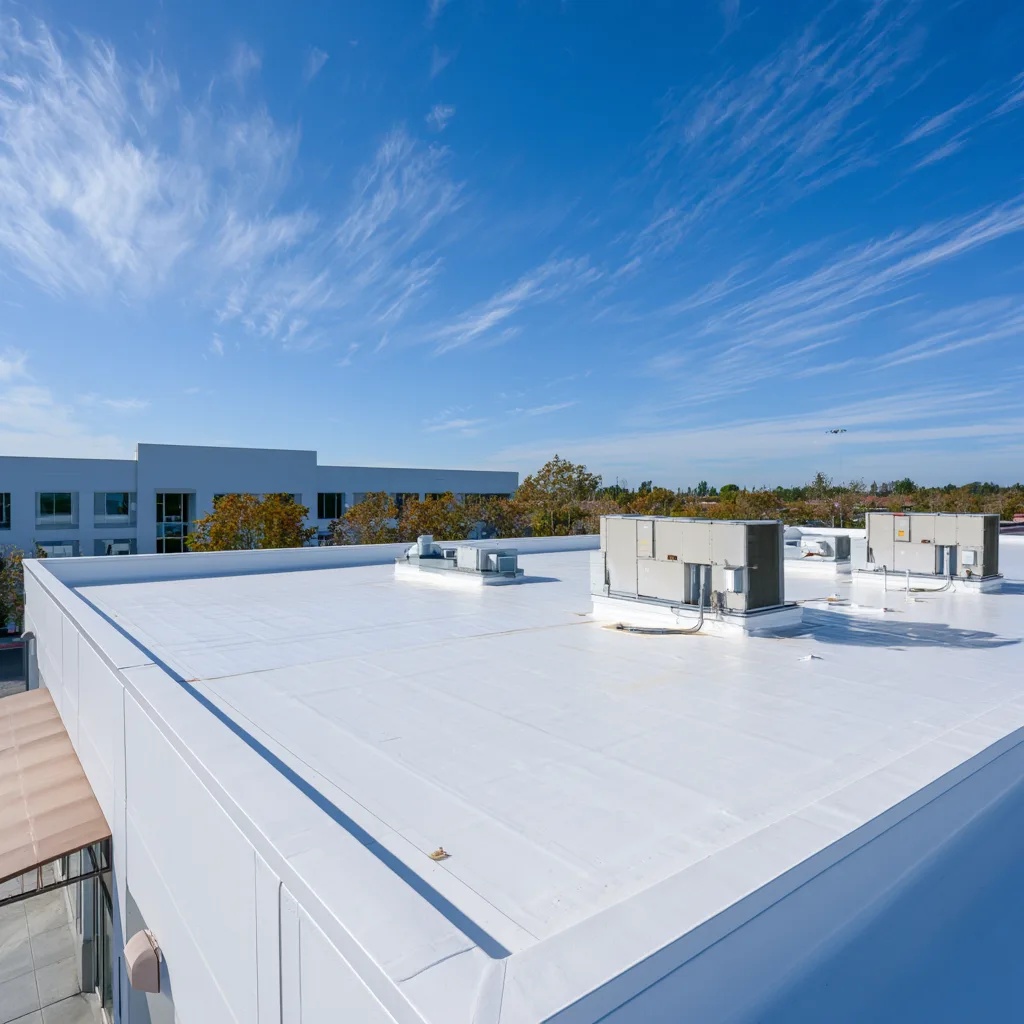
Commercial roofing in Bedford
A commercial roofing decision affects more than the roof budget. It affects tenants, equipment access and the space below a leak. Compare repair, restoration and replacement for your Bedford building by what the existing assembly can still support.
Compare the roof systems and service paths
A system name is a useful starting point, but the deck, insulation, attachment and drainage determine how it will work on the building.
An existing commercial roof may also use EPDM rubber, PVC or modified bitumen. Those materials have different seam and repair requirements from TPO. Identifying what is there matters before choosing a patch, a coating or a replacement system; a product that suits one membrane may not suit another.
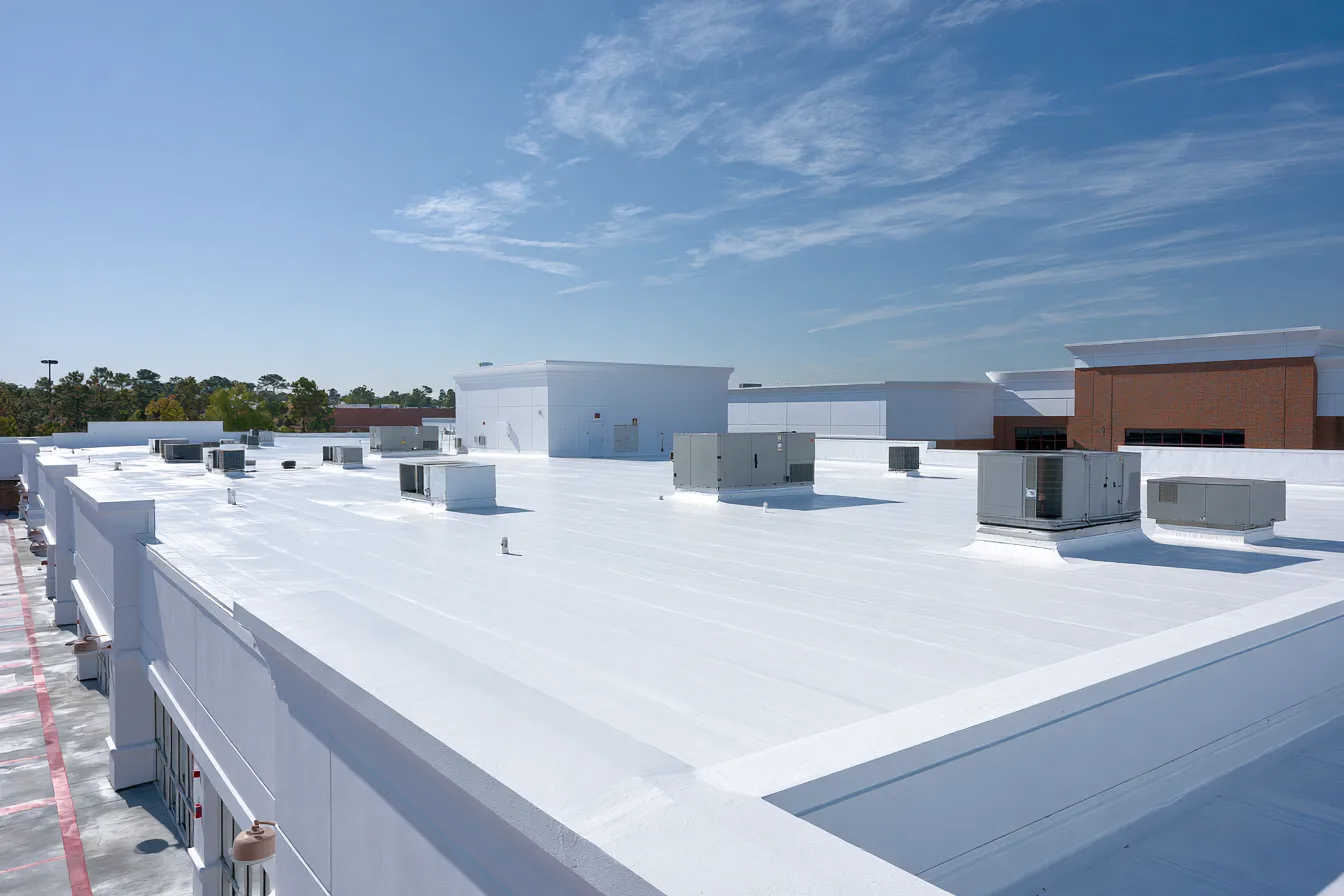
TPO roofing
A reinforced membrane with heat-welded seams, installed over a planned insulation and support assembly.
See the details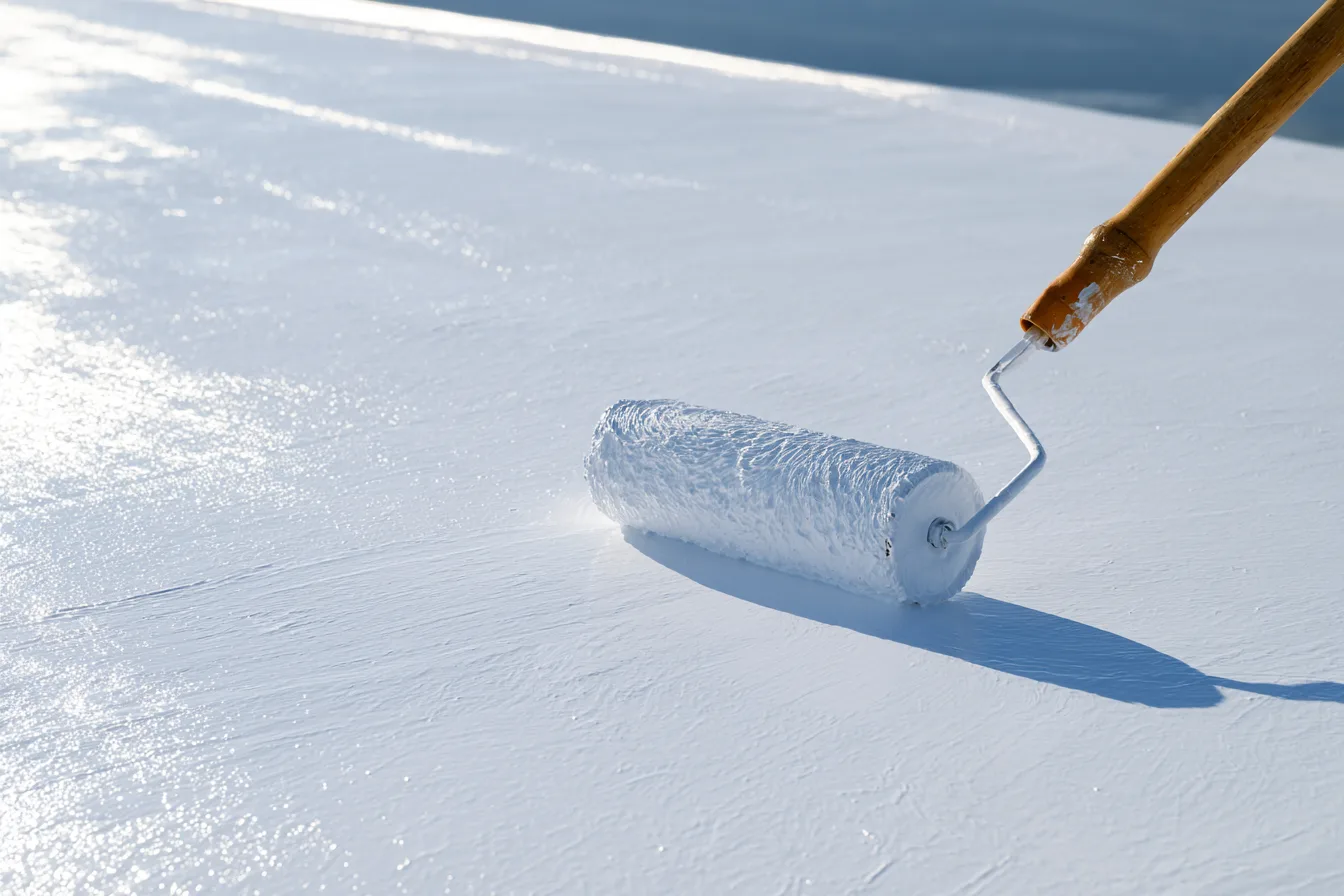
Roof coatings
Restoration for suitable existing roofs, with repairs and preparation before the coating goes on.
See the details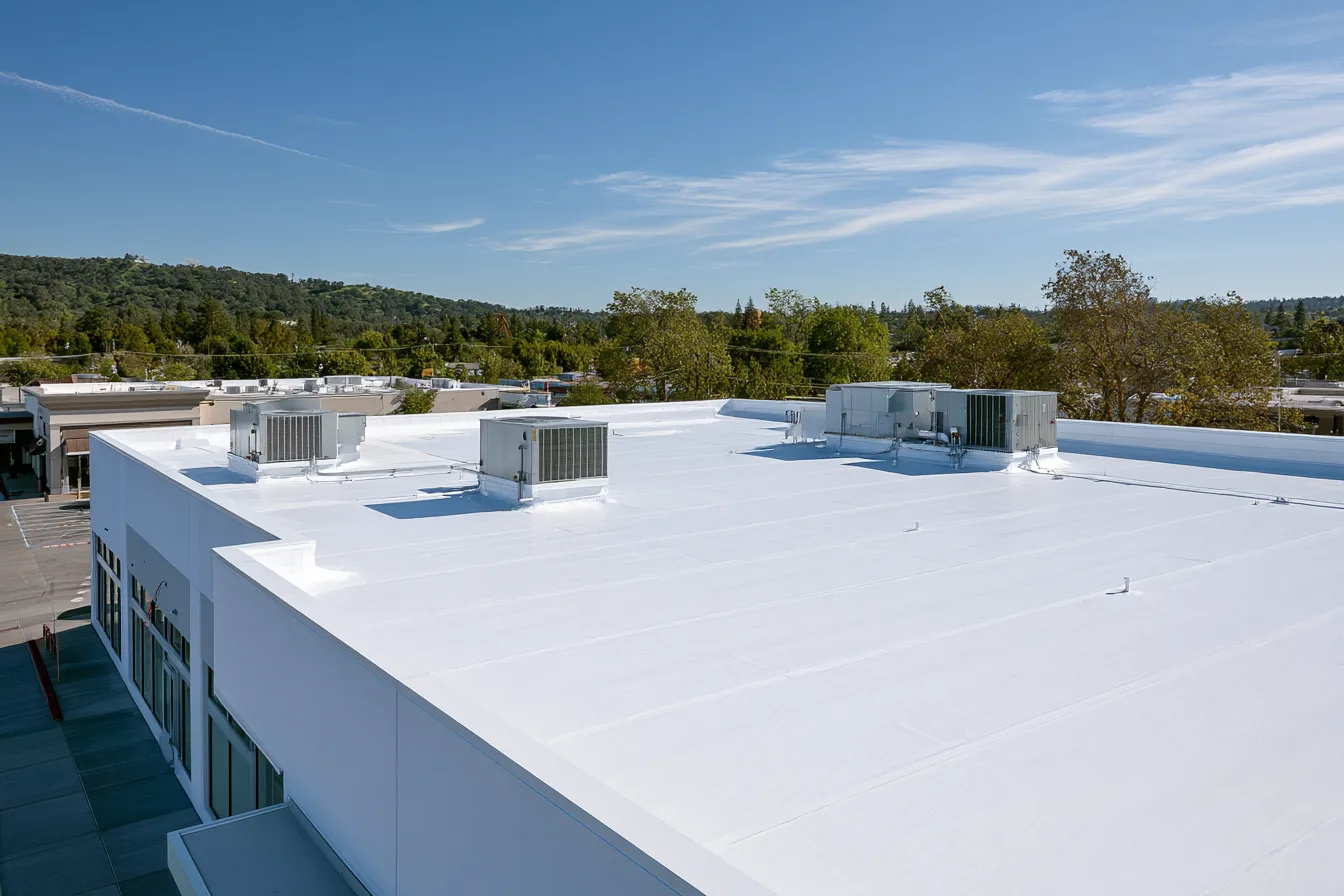
Flat roof repair
Trace leaks at seams, curbs, drains and penetrations, and deal with water that is not leaving the roof.
See the detailsRepair, restoration or replacement
The lowest initial price is only useful if it addresses the failure. A coating that leaves saturated insulation in place can preserve the problem under a cleaner-looking surface.
Price the roof as part of an occupied building
A restaurant kitchen, an office suite and a storage building do not have identical work constraints. Roof access may cross a tenant’s operating area. Material deliveries may compete with customer parking. Rooftop equipment may need to stay available during the work.
These details belong in the project scope before work starts: access routes, staging, areas below active removal, HVAC coordination and any system-specific odor or curing conditions. Phasing can help organize a project, but it does not make every operation disruption-free.
Make the hidden roof part of the decision
A dry-looking top surface does not settle the condition below it. The investigation needs to match the building’s symptoms and the proposed work.
Understand the assembly and the leak history
Identify the roof system, previous repairs, interior leak locations and rooftop changes. A moisture investigation may be needed when concealed wet areas would affect repair or restoration suitability.
Account for support, insulation and drainage
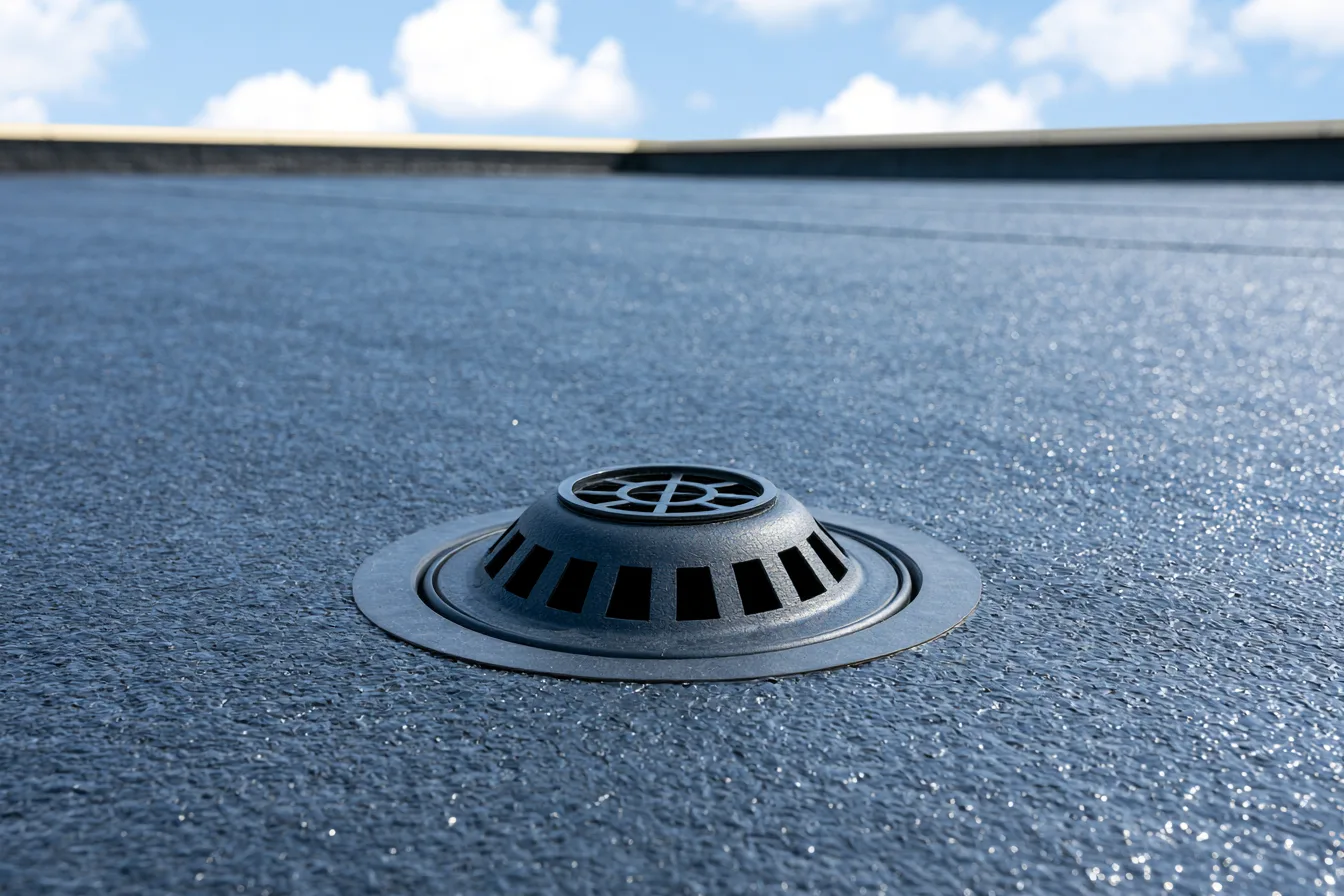
Wet insulation loses useful performance and can hide deterioration below it. Deck condition, insulation layout and slope influence the replacement scope. Tapered insulation or crickets may be part of moving water toward drains; a topcoat cannot create that geometry.
Plan the details and future access
Perimeter attachment, equipment curbs, drains and penetrations need compatible details. Repeated equipment service calls also need a route that protects the membrane. The roof should remain maintainable after the new work is finished.
See the work behind a commercial roofing price
A useful commercial roofing proposal identifies the measured roof area, removal depth, treatment of wet material, insulation, drainage corrections and work at edges and equipment. An allowance for a limited repair is different from including a known wet section in the base work. Those details explain what the price will actually buy.
Warranty duration alone is also an incomplete comparison. Coverage, exclusions, required maintenance and who performs the remedy matter. Keep the decision centered on the building’s condition and the work that changes it, rather than a single product label.
Defined roof area
The same building can receive a local repair, work over one section or a roof-wide replacement. The covered area is part of the price, not a footnote.
Removal and concealed moisture
Removing wet material changes the work beneath the visible membrane. Coating or covering it does not make the insulation dry or dependable.
Drainage and interruptions
Drains, edges, curbs and equipment flashings connect the field of the roof to the building. State which connections are rebuilt and which remain.
Remedy and ongoing care
Product coverage, workmanship responsibility and maintenance requirements answer different questions. A warranty duration alone cannot compare them.
Commercial roofing FAQs
Can a coating stop a commercial roof leak?
A suitable restoration system can protect a roof after its defects are repaired. Open seams, failed flashing and wet materials need attention first. Applying coating across an unresolved fault is not a substitute for that repair.
Can the building stay open?
That depends on the work, access, occupancy and the system used. Many projects can be organized around ongoing use, but areas below removal, equipment interruptions and deliveries still need a practical plan. Include operating constraints with the inspection request.
Can TPO go over the existing roof?
Sometimes a recover assembly is possible, but the existing condition, moisture, attachment, load, compatibility and applicable requirements must support it. Covering a wet or unsound roof just carries the defect into the new assembly.
Will a white roof guarantee lower cooling bills?
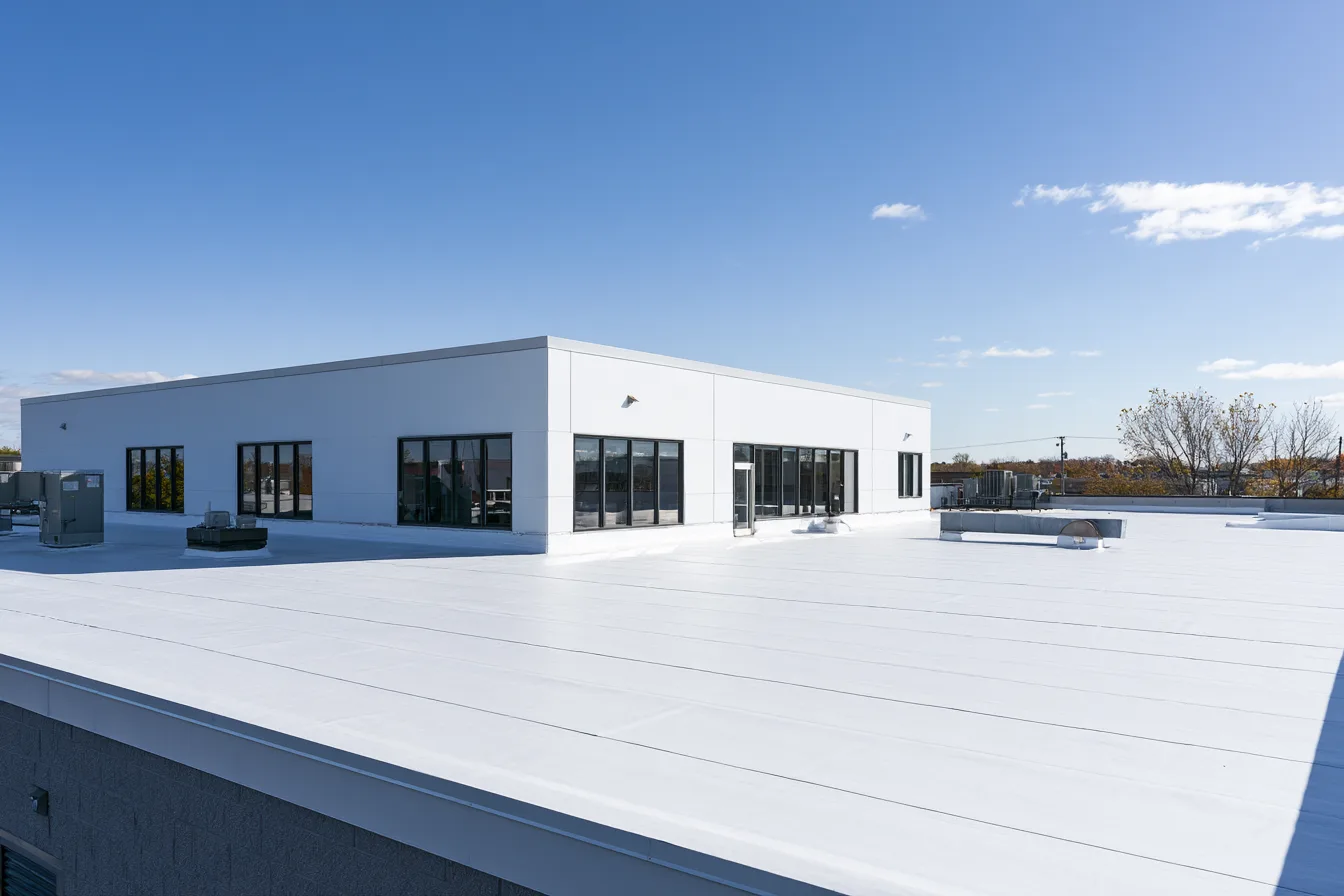
A reflective surface can reduce absorbed solar heat, but building insulation, HVAC performance, use and weather also affect energy consumption. A membrane color is not a building-specific savings calculation.
Start with the property and the roof problem
Share the building use, the roof problem and any access restrictions. Request a free commercial roof inspection to start comparing the work the property actually needs.