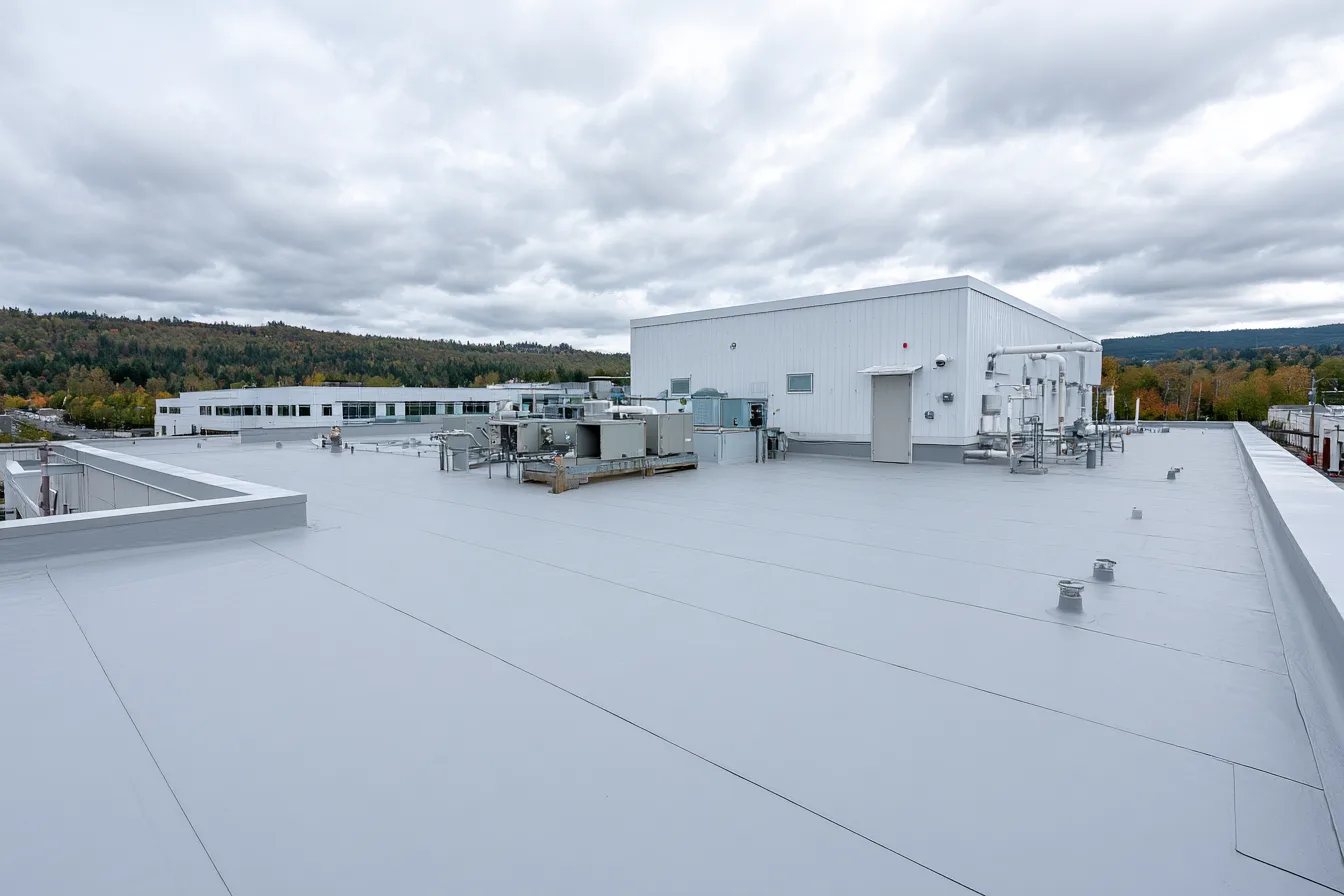
Flat roof repair in Bedford
A drip over a tenant’s desk is an operating problem as well as a roofing problem. For a Bedford low-slope roof, trace where water enters and how it drains before deciding whether the answer is a patch, a rebuilt detail or a larger section of work.
The leak may be a seam, a drain or a detail
A low-slope roof has many interruptions: equipment curbs, pipes, drains, perimeter edges and seams between sheets. A puncture left after equipment work may be as significant as an aging seam. Water can also travel within the assembly before becoming visible indoors.
The leak’s timing and location help direct the investigation. A drip during every rain, one that appears only after a long storm and water near operating HVAC equipment may not have the same source. Include previous repairs and recent rooftop work in the history.
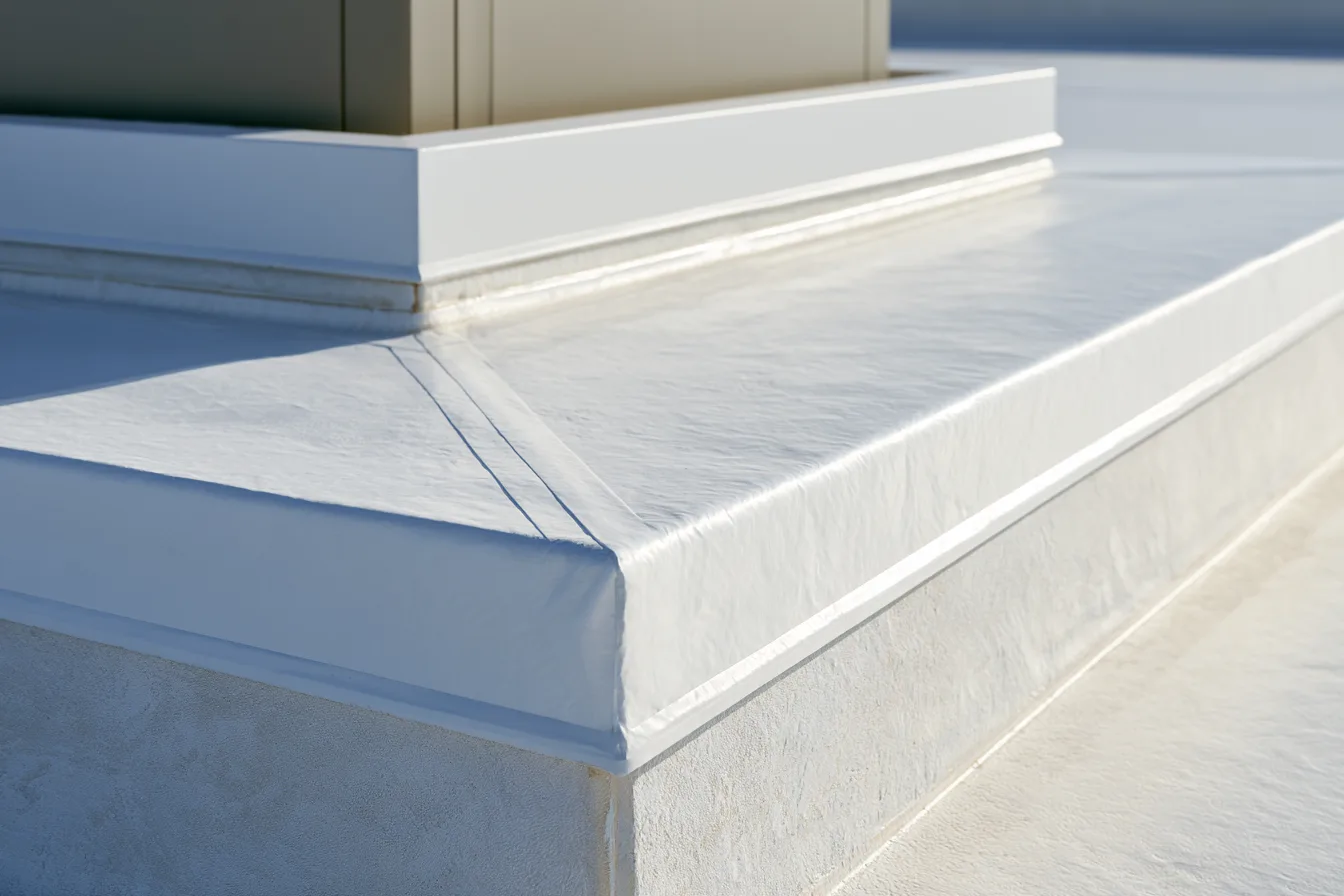
Follow the drainage route across the roof
“Flat” describes the appearance, not the intended movement of water. The roof needs a route to its outlets, even when the slope is hard to see from the ground.
Move water across the surface
Slope can come from the structure or tapered insulation. Crickets can help divert water around obstructions. A new membrane laid over the same low spot may simply preserve the old ponding pattern.
Keep outlets and overflow usable
Drains and scuppers need clear, sound connections. A secondary overflow provides another route when the primary path is obstructed or overwhelmed. Debris around an outlet can turn a manageable rain into a larger roof load.
Distinguish drainage from structural trouble
Persistent standing water deserves investigation. Surface corrections and drain work are different from correcting a sagging structure. Where structural movement is suspected, the solution needs the appropriate evaluation rather than another top-layer treatment.
Repair dry, sound material; remove what is already compromised
Local repair on a sound assembly
A compatible patch or rebuilt detail may work where the surrounding roof is dry, well attached and suitable for repair. Preparation and the correct material join matter more than the patch simply covering a large enough spot.
Work below the surface
Saturated insulation and deteriorated support need to be addressed, not sealed in. The removal area may extend beyond the visible opening. Where failures are widespread, a replacement scope can be more useful than isolated patches at each new leak.
Coordinate rooftop equipment service with roof care
Routine roof access
Equipment service should leave the roof ready for rain. Tools, screws and cut metal can damage membranes or block drainage. Planned access routes and protective walk pads help reduce repeated wear around frequently serviced units.
A leak can have more than one source
Condensate discharge and new penetrations also deserve attention. A change made for the mechanical system can alter water exposure or create an opening in the roofing. Recording recent rooftop work can make a new leak easier to trace.
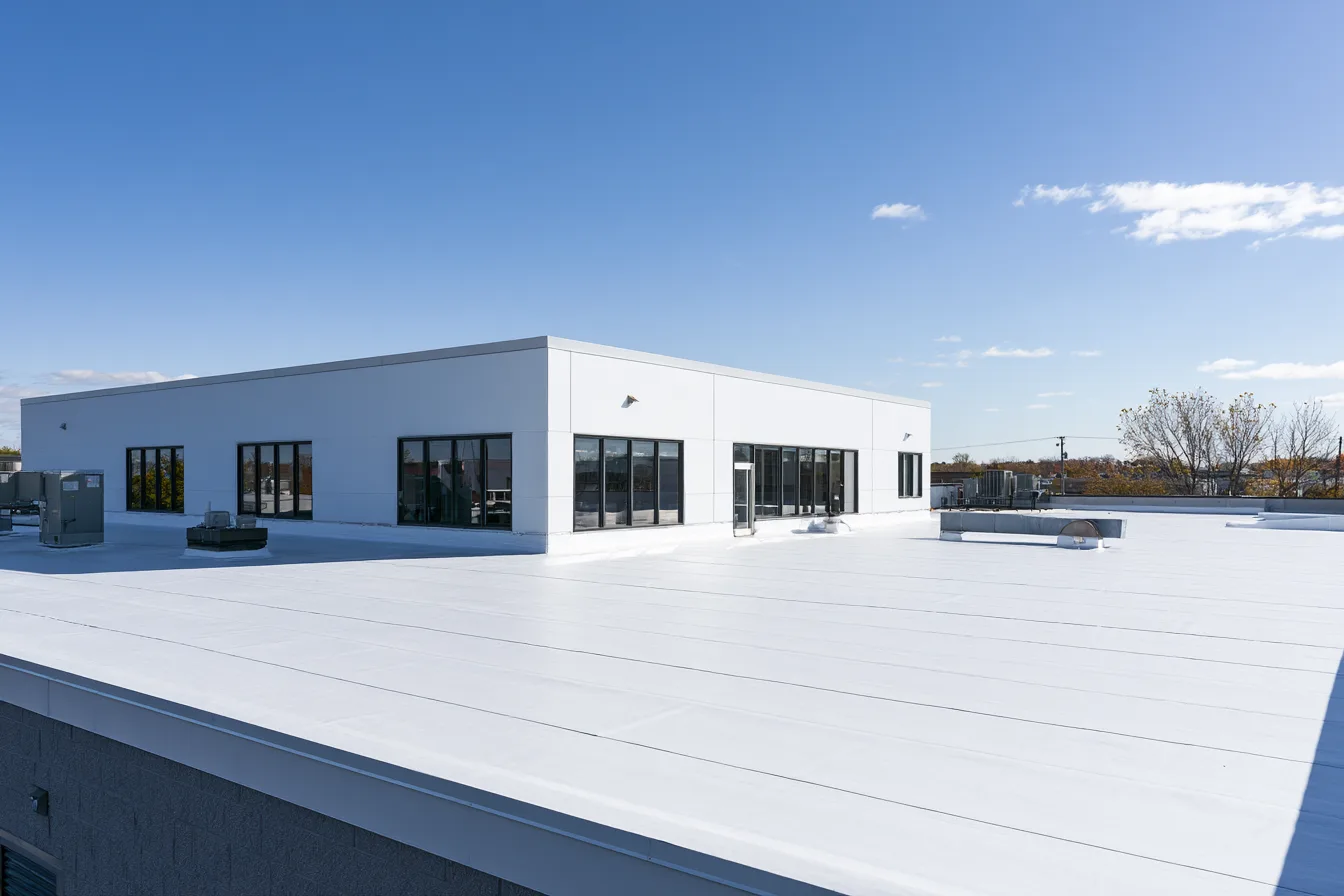
Describe the leak and the building below it
Request a free commercial roof inspection with the leak location, building use and access constraints. That information helps relate the roof repair to the space that needs protection below it.