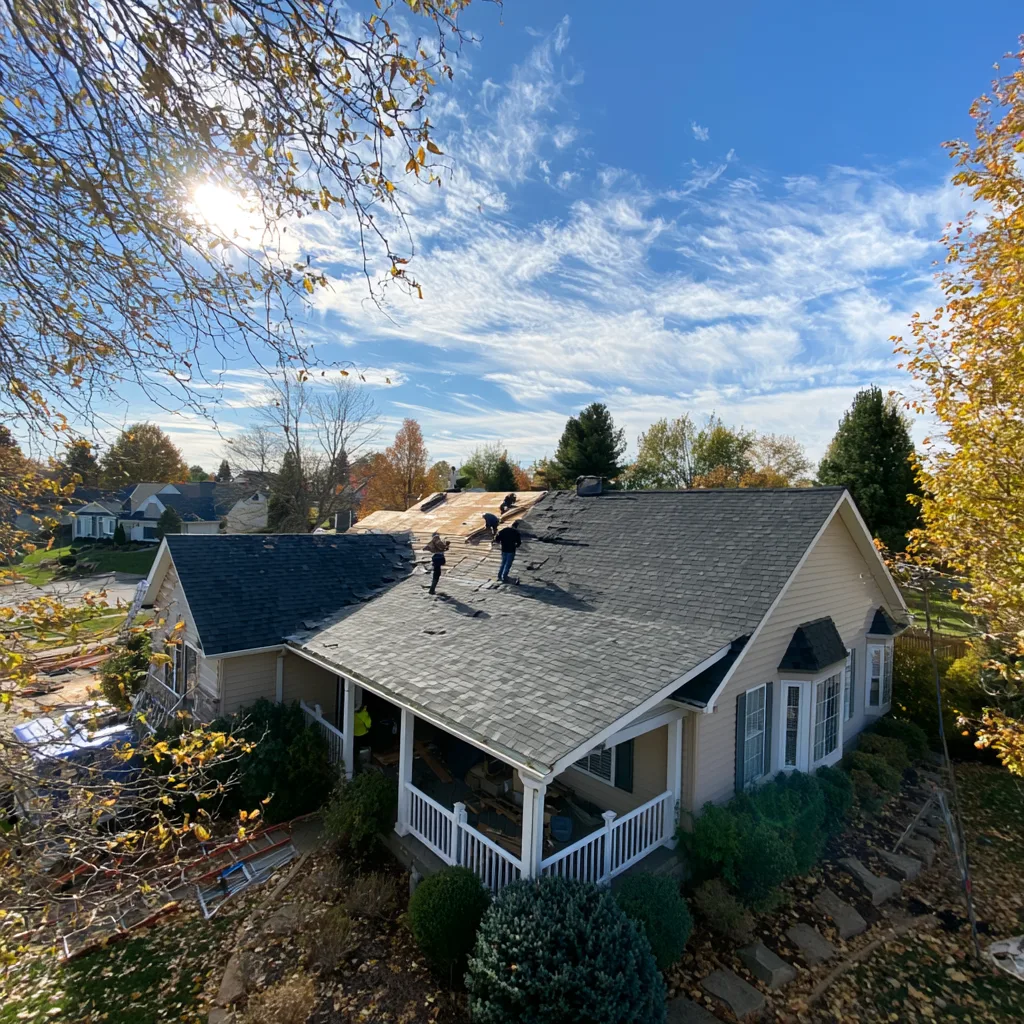
Bedford roofing permits and decking
Understand how Bedford’s permit and decking guidance fits into a roof replacement. Start with the work your roof needs.
Separate the permit question from the decking decision
Bedford’s residential reroof guidance answers two questions that are often mixed together: whether a permit is required and whether the old decking can stay. Here is how those requirements fit into a roof replacement plan.
Replacement and recovering
Bedford requires a contractor to obtain a permit for residential roof replacement and recovering. Sound existing decking can remain where it meets the city’s sheathing guidance.
Replacement and recovering require a permit
The city’s residential permit guidance says a contractor must obtain a permit for roof replacement and recovering. Adding a new covering over an existing roof does not remove that requirement.
Bedford’s permit information page provides the current application route. Confirm the actual address and proposed work with the contractor and city as the project is planned. Guidance checked September 10, 2026.
Solid sheathing does not mean all-new decking
The city’s roof-sheathing guidance requires a solidly sheathed deck and allows sound existing decking to remain. It does not turn every shingle replacement into a complete redecking job.
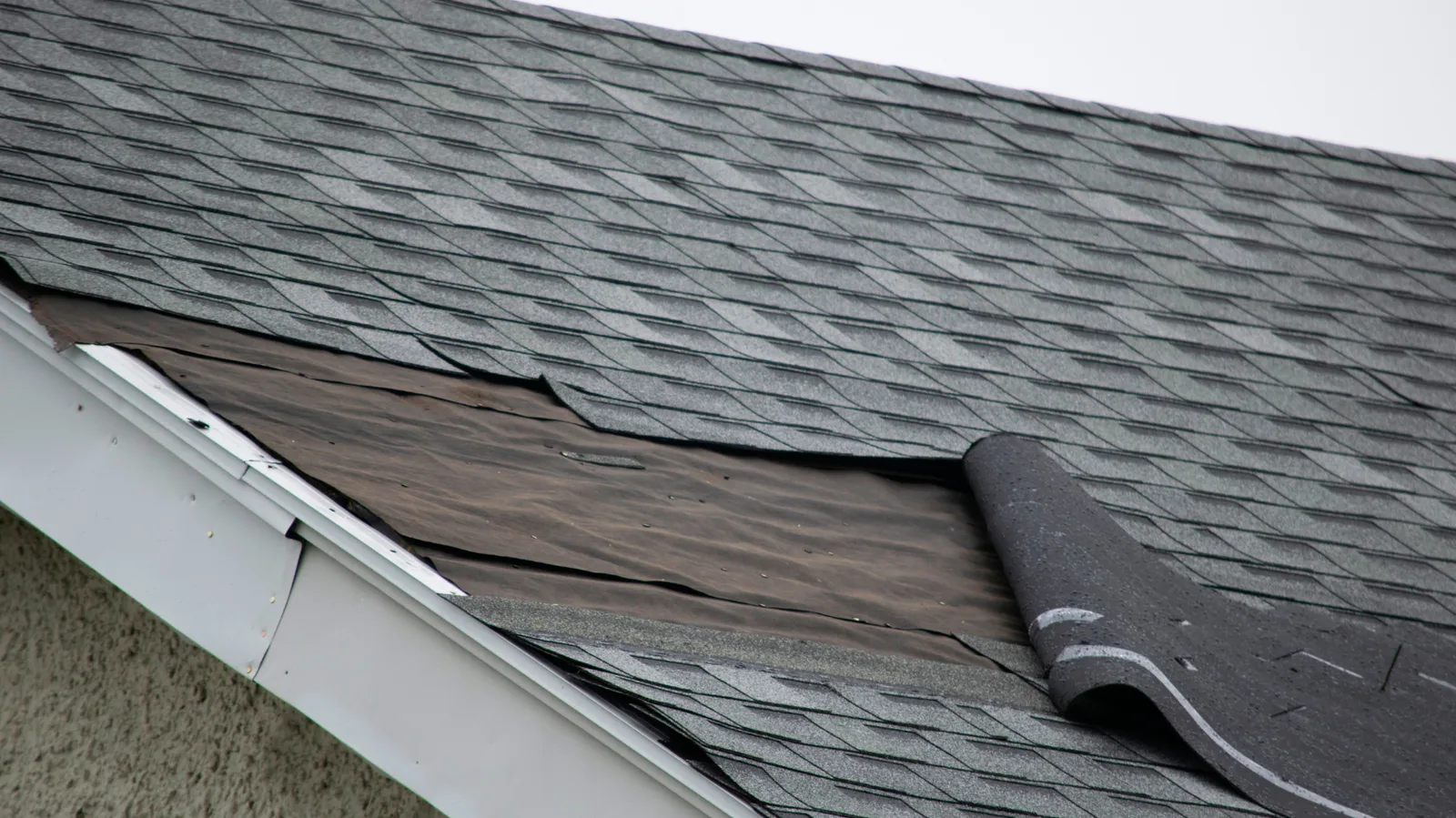
The deck is the fastening base. Soft wood, broken areas or separating panels can prevent the new covering from being secured properly. What needs replacement depends on that condition and the assembly requirements, not simply the house’s age.
Plan for what is known and what tear-off may reveal
Known work can be planned
If damage is already visible or established, it can be described in the initial scope. The material, area and required coordination can then be considered before roofing removal starts.
Concealed findings need a clear next step
The covering can hide further weak areas. If tear-off reveals them, the contractor needs to explain the changed work and address any permit or inspection implications before that part of the roof is covered again. The possibility is worth discussing before the crew opens the roof.
Settle jurisdiction and scope together
Use the property’s actual jurisdiction, not only the postal city name. Then describe the roofing work accurately: replacement or recover, proposed covering, known decking changes and any other alterations. A generic “roof work” label may not answer the city’s project-specific questions.
Permit requirements and product requirements address different parts of the job. A permit is not a workmanship warranty, and a shingle warranty does not take the place of the applicable city approval. Keeping those roles clear makes the sequence easier to follow.
The replacement work sequence
Start by finding out what the roof needs
A free roof inspection can help clarify the condition and likely work. Begin there if you don’t yet know whether the project is a repair or a full replacement.