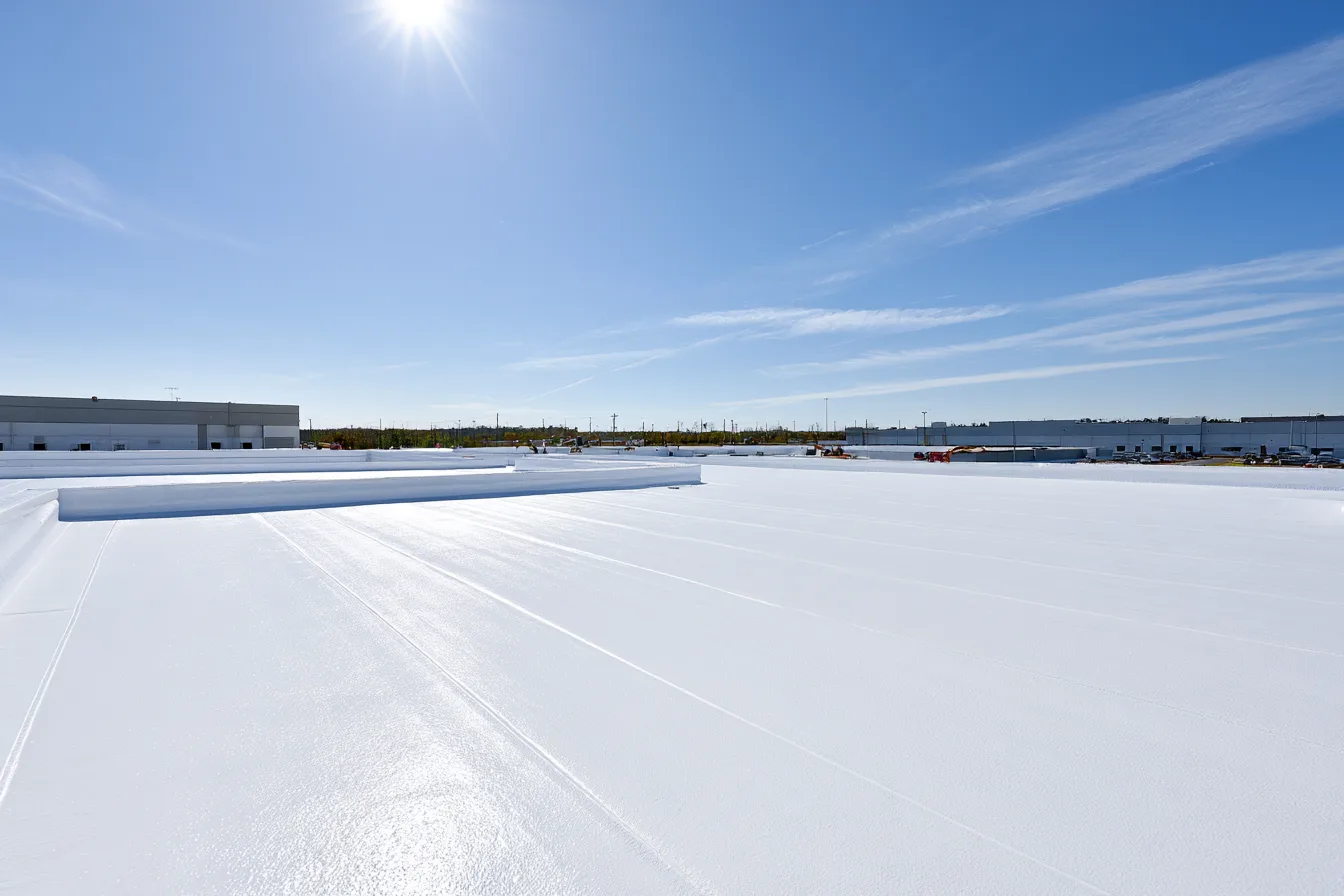
Roof coatings in Bedford
Keeping a sound roof can be a good investment. A coating becomes a useful option when the existing Bedford roof can support it, the necessary repairs are included and the finished system addresses the building’s actual exposure.
The roof must pass the suitability question first
Restoration is a condition decision before it is a price comparison. The coating needs a stable, compatible surface beneath it.
Silicone and acrylic need the right conditions
Silicone and acrylic coatings are not interchangeable labels for white paint. Water exposure, drying conditions, the underlying roof and the proposed system determine suitability. Silicone systems can have useful water-exposure characteristics; acrylic systems need conditions and drainage compatible with their requirements.
Adhesion is central to either choice. The existing surface may need repairs, cleaning, testing and a specified primer. A coating with a good product specification can still fail to perform when it is applied over contamination or an incompatible layer. Traffic and later recoating also affect the material choice.
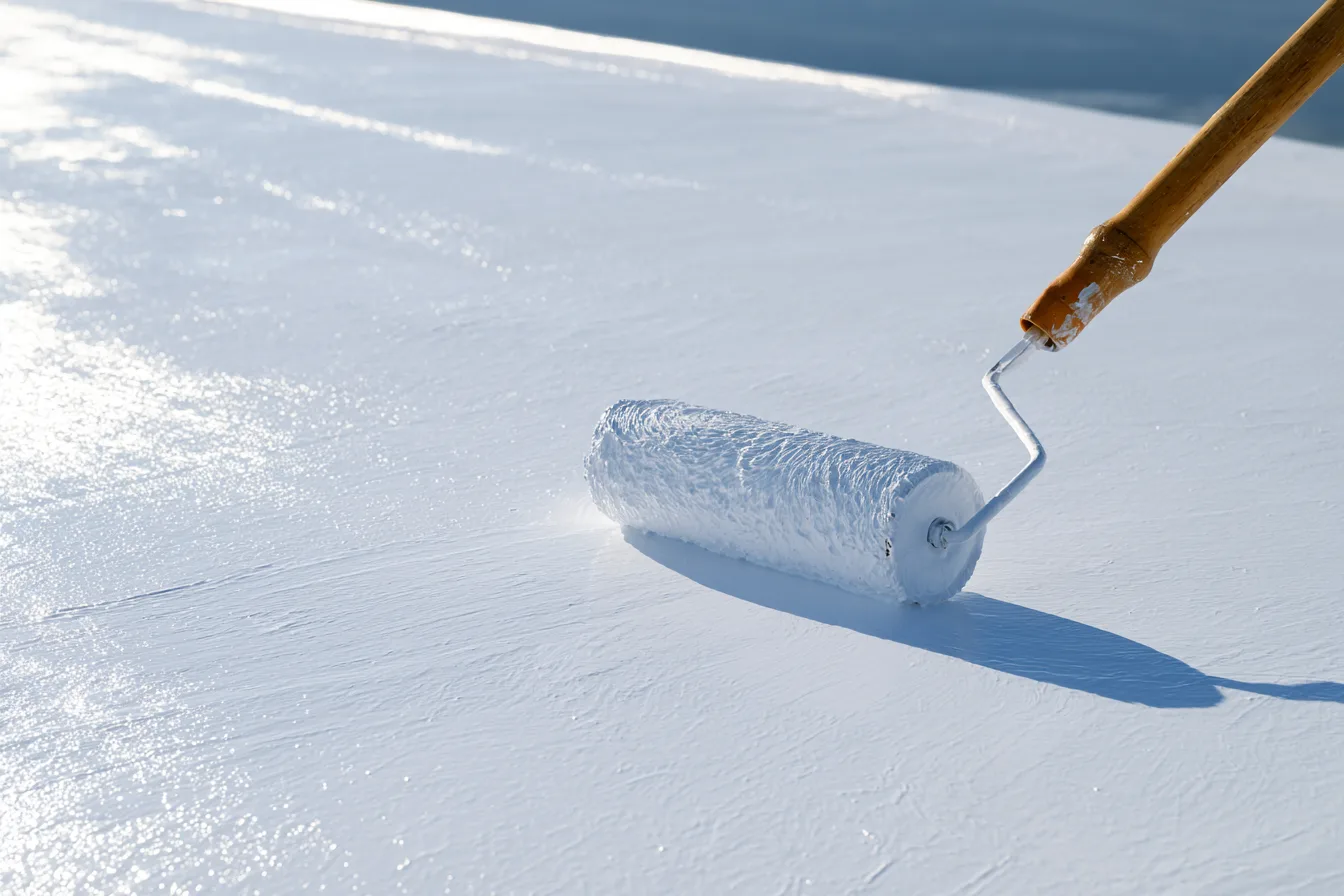
Preparation is part of the price
A restoration price that covers only applying material leaves the important suitability work unanswered.
Investigate and repair
Locate areas that cannot be retained, including wet or unsound material. Repair open seams, failed flashings and other defects using a method compatible with the proposed restoration system.
Prepare the surface and details
Cleaning and adhesion testing help establish whether the coating can bond. The system may call for primer and reinforcement around seams, curbs or penetrations. Preparation is not an optional cosmetic extra.
Apply the specified system
Coverage and dry-film thickness matter, as do application and curing conditions. Inspection should address the finished surface and reinforced details. A fresh white appearance does not by itself show that the required coating thickness is present.
Compare the restored roof with the replacement alternative
The condition worth retaining
Restoration can retain suitable material and avoid some removal. The useful comparison is what remains after the work: drainage, insulation condition, attachment and the life of the details around equipment. A lower price loses its value if those unresolved items bring the same leak back.
The complete restoration work
Compare the areas covered, preparation, localized replacement, system requirements and future maintenance or recoating. A coating cannot flatten a structural sag or turn a badly draining assembly into a correctly sloped one. If those problems dominate the roof, replacement or more substantial correction may be the better investment.
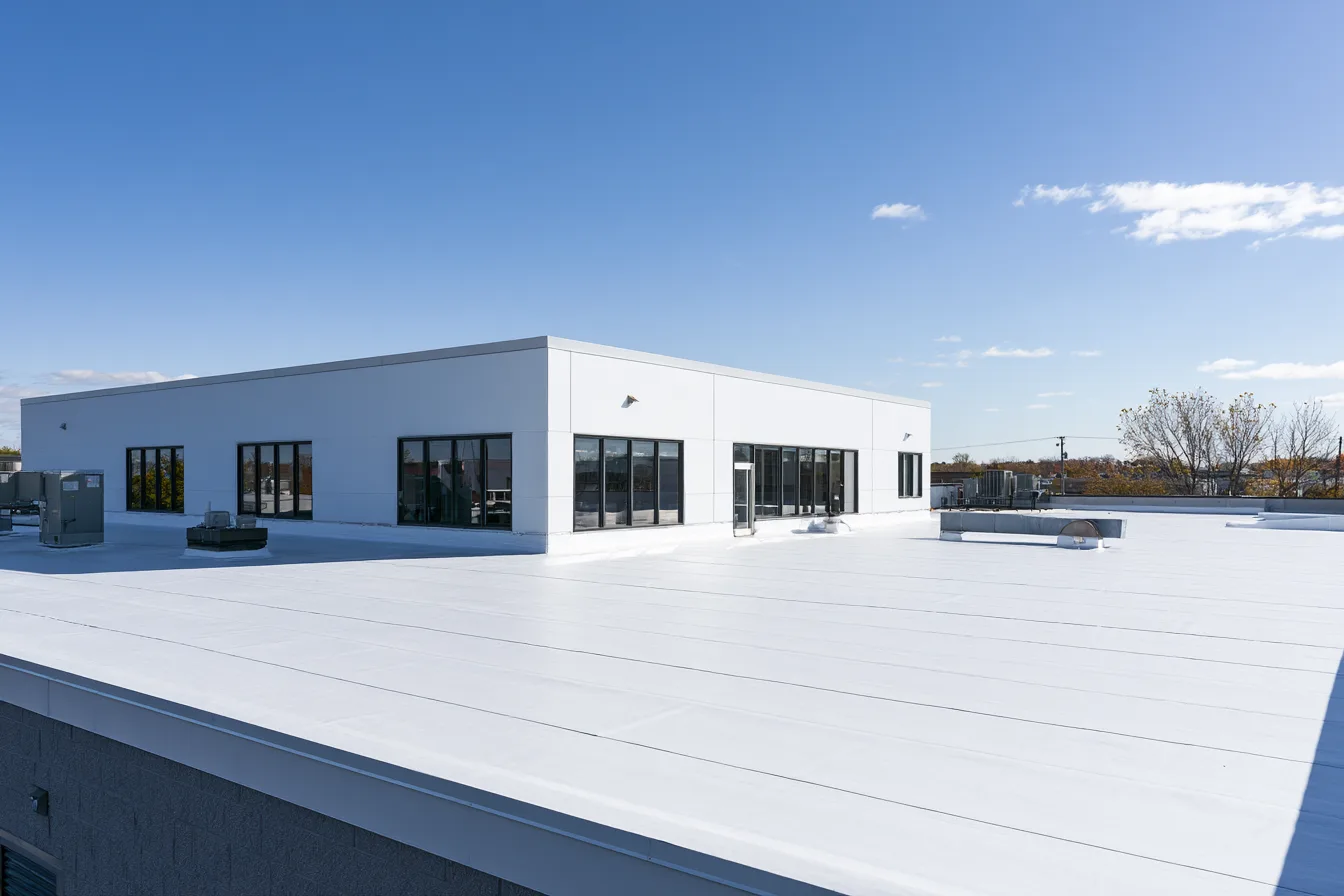
See whether the existing roof is worth restoring
Start with a free commercial roof inspection. Tell us the existing roof type, any recurring leaks and whether restoration has been tried before, so the suitability question comes first.